The worst time to find out what your snow removal contract actually says is 4 a.m. during the first real storm of the season. Was the lot supposed to be plowed at 2 inches or 4? Are the sidewalks included? Who pays for the extra salt after an ice storm?
Most winter disputes between property managers and plow contractors come back to the same thing: something important was assumed instead of written down. November is the month to fix that. If you are signing or renewing a contract for commercial snow plowing in CT, this guide walks you through the pricing models, the clauses that matter and a checklist to use before you sign.
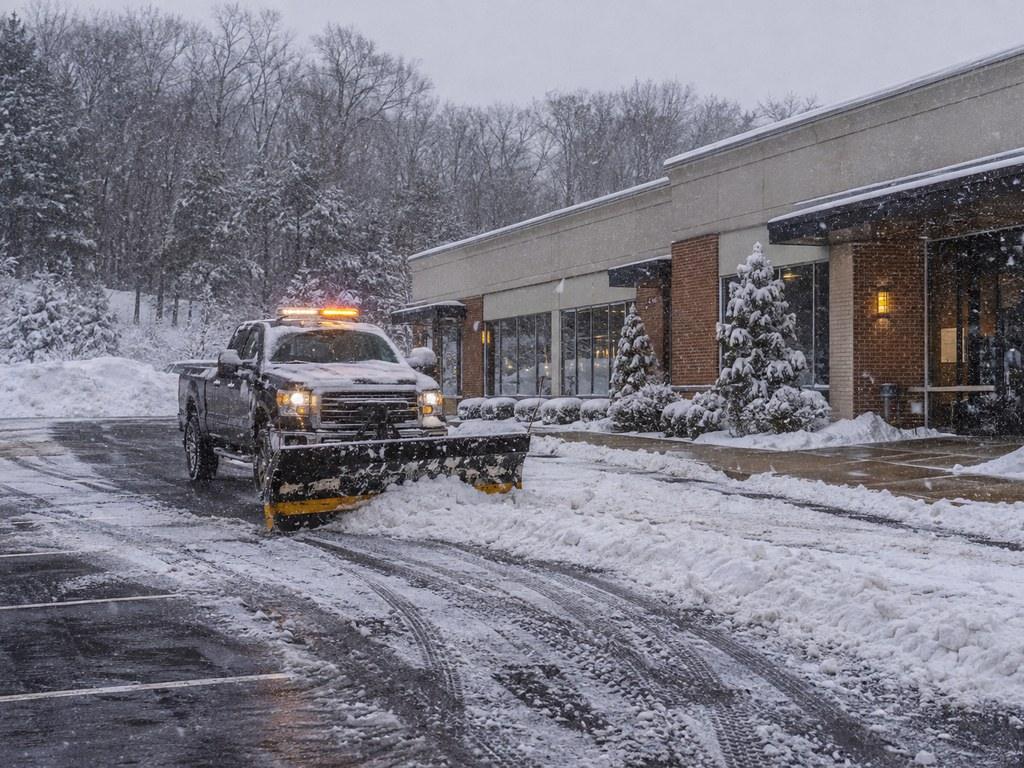
We plow and treat commercial lots across the Thomaston, Bristol, Farmington and Litchfield County area, and these are the points we recommend every property manager settles in writing before winter.
Quick Answer: Which Snow Removal Contract Fits Your Property?
| Contract type | How billing works | Best for | Main risk |
|---|---|---|---|
| Seasonal (flat rate) | One fixed price for the season, often split into monthly payments, no matter how many storms | Properties that need a predictable winter budget, such as HOAs, apartment complexes and offices | You pay the same in a light winter as in a heavy one |
| Per push | A set price each time the crew plows the lot | Owners who want to pay only for service actually delivered | Costs climb in a snowy winter and long storms can mean several pushes |
| Per event (or per inch tiers) | A set price per storm, often tiered by depth such as 1 to 3 inches or 3 to 6 inches | Properties that want per-storm pricing with fewer invoices | Disputes over how a storm and its depth are measured |
| Hourly (time and materials) | Hourly rates for each piece of equipment plus materials such as salt, added up after each storm | Irregular sites or extra work outside the regular scope | Hardest to budget and needs careful review of hours and material logs |
There is no single right answer. The best contract is the one where everyone knows exactly what triggers service, what gets cleared and how it is billed. Pricing for every model depends on lot size, the level of service you need and how many storms the winter brings, which is why a site walk comes before any quote.
What Should a Commercial Snow Removal Contract Include?
A good commercial snow removal contract reads like an operating manual for your property in winter. At a minimum, it should spell out:
- The parties and the property. Legal names, the service address and a site map.
- The term. Start and end dates for the season (for example, a date in November through a date in April) and how renewal works.
- The pricing model. Seasonal, per push, per event or hourly, with the rate for each service.
- The trigger. The snow depth or condition that sends a crew out, and who decides.
- Response time and service hours. How soon after the trigger the crew arrives, and when lots must be open (for example, before your first shift or opening time).
- The scope. Every surface that gets cleared: drive lanes, parking spaces, loading docks, fire lanes, dumpster pads, sidewalks, entrances and stairs.
- Ice management. When salt or other deicer is applied, which areas get treated and how materials are billed.
- Snow piling and hauling. Where snow goes and what happens when there is no room left.
- Communication. Who to call during a storm, how service is confirmed and how problems get reported.
- Damage reporting. How and when damage to curbs, turf, lights or signs is reported and repaired.
- Insurance and documentation. Certificates of insurance and service logs (more on both below).
Why the site map matters
A marked-up site map removes most of the guesswork. It should show the areas to plow, the sidewalks to shovel, approved snow pile locations, fire hydrants, drains, curbs, islands, speed bumps and anything else a plow driver cannot see under 10 inches of snow. Staking curbs and islands before the ground freezes saves damage to both the property and the equipment.
If you want help thinking through layout, priorities and staffing before you sign, our guide on how to create a commercial snow removal plan pairs well with this checklist.
Seasonal, Per Push or Per Event: Which Pricing Model Fits Your Property?
Connecticut winters vary a lot from year to year, which is the real reason pricing models exist. At Bradley International Airport, the 1991 to 2020 normal snowfall adds up to roughly 52 inches across the season, with about 10 inches in December, 14 in January and 15 in February, according to NOAA’s official climate normals. Higher ground in Litchfield County often sees more. A normal is an average, though, so any given winter can land well above or below it.
For the coming season, NOAA’s 2026 to 2027 U.S. Winter Outlook favors warmer than average temperatures for much of the East and wetter than average conditions along the East Coast. In practice, that can mean more mixed precipitation and freeze and thaw cycles, which shifts work from plowing toward salting. An outlook is about odds, not a storm count.
Seasonal contracts
A seasonal contract trades flexibility for certainty. You know your winter cost in November. The contractor carries the risk of a heavy winter, and you carry the risk of a light one.
Ask these questions before you sign a seasonal snow removal contract:
- Is there a cap on the number of pushes or events, and what is the rate after the cap?
- Is salting included or billed separately?
- Are blizzards or storms over a certain depth billed extra?
- What happens if the season starts early or runs late?
Per push and per event contracts
Per push pricing means you pay only when the crew plows. It is simple, but it needs clear definitions. A long storm can mean the crew plows two or three times, so the contract should state when a new push starts. Per event contracts usually price each storm by depth tier, which only works if the contract names how depth is measured.
Hourly contracts
Hourly, or time and materials, contracts work for odd sites or work outside a regular route, such as hauling. They are the hardest to budget. If you choose hourly, ask for itemized logs showing equipment, hours and material used for each storm.
What Triggers a Plow Visit (and Who Decides)?
The trigger is the single most important line in any snow plowing contract. It is the depth or condition that sends the crew out. Common triggers are 1 inch, 2 inches or 3 inches of accumulation, but there is no universal standard. A medical office that opens at 7 a.m. needs a lower trigger than a warehouse that is closed on weekends.
Write down:
- The trigger depth for plowing, and whether a lower trigger applies to sidewalks and entrances.
- Who measures it and where. On site, at a named weather station or by the contractor’s judgment.
- Whether a crew plows during the storm or only after it ends, and how often during long storms.
- The response window, such as a set number of hours after the trigger is reached.
- Priority areas that get cleared first, such as fire lanes, emergency entrances and accessible parking.
- Cleanup after the storm, including pushing back banks and clearing drifts.
Plowing during a storm also costs more than plowing once at the end, so the trigger decision is a budget decision as much as a safety one.
Salting, Sidewalks and Hauling: What Is Often Left Out
The plowing line is usually clear. The problems hide in the extras.
Salting and deicing
Plowing moves snow. It does not stop refreezing. Melting snow piles and freezing rain are what create slick spots after the lot looks clean, which is why we explain in a separate post why plowing alone is not enough. Your contract should state:
- Whether pretreatment is applied before a storm, and when.
- Which surfaces get salted after plowing, and the trigger for a salt only visit (for example, freezing rain or refreeze with no new snow).
- What material is used and how it is billed (included, per application or per ton or bag).
Material choice matters. The Connecticut Department of Energy and Environmental Protection notes that rock salt (sodium chloride) is effective down to 15 degrees F, that calcium and magnesium chloride work at lower temperatures but contain twice the chloride, and that applying thick layers of salt can actually make ice patches. DEEP also describes anti-icing with brine 24 to 48 hours ahead of a storm. A contract that pays by the ton with no rate guidance can reward overuse, so ask how application rates are decided.
Sidewalks and entrances
Sidewalks are often a separate line item, done by a shovel or snow blower crew rather than the plow truck. Name every walkway, stair, ramp and entrance on the site map. The federal OSHA standard for walking and working surfaces says employers must keep them free of hazards such as snow and ice, and OSHA’s winter weather guidance advises clearing snow and ice from walking surfaces and spreading deicer as quickly as possible after a storm. For a business with employees on site, that makes walkways a priority, not an extra.
Snow piling, relocation and hauling
Every lot runs out of room in a heavy winter. The contract should name approved pile locations (away from drains, sight lines at exits and the low side of the lot where melt can refreeze across drive lanes) and say when snow will be moved or hauled off site and how that is priced. We offer snow hauling and relocation for tight sites, and it is much easier to agree the terms in November than in February.
Insurance, Documentation and Liability Questions to Ask
Snow and ice raise real risk. The Federal Highway Administration notes that snow and ice reduce pavement friction and vehicle maneuverability and increase crash risk on roads (FHWA Road Weather Management). A parking lot is no different, which is why the paperwork side of the contract deserves as much attention as the price.
We are not attorneys, and nothing here is legal advice. Liability, indemnification and insurance clauses should be reviewed by your attorney and your insurance agent before you sign. These are the questions worth bringing to that review:
- Certificate of insurance. Ask for a current certificate showing the contractor’s general liability, auto and workers’ compensation coverage. Ask your agent whether you should be named as an additional insured.
- Indemnification. Who is responsible for which claims, and does the language run one way or both ways?
- Responsibility between visits. Most contracts say the contractor is responsible for conditions at the time of service, and that the owner reports problems between visits. Make sure that matches how your property actually operates.
- Service logs. Ask for a record of each visit: date, arrival and departure times, the services performed and materials applied. Photo or GPS logs make this easier. These records support invoices and give you a history if a question ever comes up.
- Damage reporting. A deadline for reporting plow damage (for example, by a set date in spring) and how repairs are handled.
- Communication plan. A named contact for storm days and how you will be told when service is complete.
Snow Removal Contract Checklist
Use this snow removal contract checklist when you review a proposal or renewal. If any line is blank, ask before you sign.
- Property address, legal names and a marked site map are attached.
- Season start and end dates and renewal terms are written in.
- The pricing model is named (seasonal, per push, per event or hourly), with every rate listed.
- Any cap on pushes or events, and the rate after the cap, is stated.
- The plow trigger depth is written, plus any lower trigger for walkways.
- It says who measures snowfall and where.
- The response window and the time lots must be open are written.
- Priority areas are named: fire lanes, entrances, accessible spaces, loading docks.
- Every sidewalk, stair and ramp is listed or shown on the map.
- Salting triggers, materials and billing are spelled out, including salt only visits.
- Approved snow pile locations and hauling terms are included.
- Exclusions are listed (roofs, return trips after town plows, anything else).
- A current certificate of insurance has been received.
- Indemnification and liability language has been reviewed by your attorney or insurer.
- Service logs (times, services, materials) will be provided, and you know how to get them.
- A damage reporting process and deadline are written.
- Storm day contacts on both sides are named.
For a look at the equipment side, see our guide to the essential tools for commercial snow removal. The right equipment for your lot affects how fast a crew can meet the response window you write into the contract.
When Should You Sign a Snow Removal Contract?
Sign before the first storm, ideally in October or November. Signing early gives the contractor time to walk the site, mark curbs and islands and add your property to a route. It also gives you time to compare proposals line by line instead of signing the first offer during a storm warning.
Frequently Asked Questions
What is the difference between per push and seasonal snow removal?
Per push means you pay a set price each time the crew plows. Seasonal means you pay one fixed price for the whole season no matter how many storms there are. Per push matches cost to actual snowfall. Seasonal gives you a predictable budget.
How much does a commercial snow removal contract cost?
It depends on lot size, how many surfaces are included, the trigger depth, response time, salting and the pricing model. A large lot with a 1 inch trigger and 24/7 sidewalk service costs more than a small lot plowed after the storm ends. The only reliable number is a written quote after a site walk.
Is salting included in a snow plowing contract?
Not always. Many contracts price salting and deicing separately, either per application or by material used. Check whether salting is included, what triggers a salt only visit and how materials are billed.
Who is responsible for ice between plow visits?
That depends on what your contract says, which is why this clause is worth reading closely. Many contracts limit the contractor’s responsibility to the time of each visit. Have your attorney or insurer review this language and make sure it matches how your property operates.
Get Your Snow Removal Contract in Place Before the First Storm
Writing a clear contract is easier in November than in the middle of a storm. Our crew handles parking lot plowing, sidewalk and walkway clearing, salting and deicing, and snow hauling for commercial properties across our Connecticut service area, with 24/7 service during storms.
Call us at (860) 248-7966 or request a free quote for commercial snow plowing in CT. We will walk your site, talk through the trigger, scope and pricing model that fit your property and put it all in writing before winter arrives.