Most lawn damage in Connecticut is done between December and March, but you only see it in spring. Matted gray patches, a dead brown strip along the driveway, sod peeled up where the plow caught the edge. By then it is too late to prevent, and the repair eats into the best weeks of the growing season.
Good winter lawn care is mostly about what you do in November. The last mow, the leaves, the final feeding and how you set up the edges for snow all decide how your grass comes out of winter. Our crew handles this every fall as part of our landscape maintenance in Connecticut, and this guide shares the same checklist so you can plan your own lawn or property.
We cover the three big winter threats in our part of the state (snow mold, road salt and plow damage), the Connecticut fertilizer rules that apply once December starts, and a simple spring recovery plan.
Quick Answer: Winter Lawn Care Month by Month
| When | What to do | Why it matters |
|---|---|---|
| November | Keep mowing until the grass stops growing, lowering the height a little with each cut. Remove leaves. Mark lawn edges along driveways and walks before the ground freezes. | Long, matted grass and leaf cover create the damp conditions snow mold needs. Markers show plow operators where pavement ends. |
| December to February | No phosphate fertilizer on any Connecticut lawn from December 1 to March 15. Keep foot traffic off frozen turf. Use de-icers sparingly and do not pile salty snow on the lawn. | State law sets the fertilizer window. Salt and compacted snow are the main causes of damage along edges. |
| March (snowmelt) | Gently rake matted patches, flush salty strips with water, fix plow scrapes, then reseed bare spots as the soil warms. | Most snow mold patches recover from the crowns once the grass dries out. Salt and scraped areas usually need soil and seed. |
What Does Winter Lawn Care in Connecticut Actually Involve?
Cool-season grasses like Kentucky bluegrass, fescues and ryegrass go dormant in winter, so there is no mowing or watering to do once the ground freezes. Winter lawn care is really about protecting the turf while it sleeps and setting it up to green up fast in spring.
In practice, that comes down to four jobs:
- Finish the season right: a final mow at the right height and a lawn cleared of leaves.
- Feed on time, not late: fertilizer belongs in early fall, not on frozen ground.
- Plan for snow: mark edges, decide where snow will be piled and limit salt near grass.
- Recover in spring: check for snow mold, salt burn and plow damage as soon as the snow melts.
On commercial sites, the same steps apply on a bigger scale. Parking lot islands, sidewalk strips and entrance lawns take the most salt and plow traffic, so they need the most attention before the first storm.
When Should You Do the Last Mow, and How Short?
The simple rule from UConn Extension is to keep mowing as long as the lawn is growing. In milder falls, growth can continue into early November. UConn also recommends lowering the mowing height as the season goes on, so the grass goes into winter short.
Short does not mean scalped. Never remove more than one third of the leaf blade in a single cut. UConn’s eco-friendly lawn guidance notes that a 3 inch height is preferred for most home lawns during the season, and that cutting too short stresses the turf. So step the deck down gradually over the last two or three mows instead of dropping it all at once.
Why it matters for winter: tall grass flops over under snow and mats down. That wet, matted canopy is exactly where snow mold gets started. If you want a full year view of heights and timing, see our seasonal mowing schedule.
Our tip: use the last mow to mulch or bag the final leaves. UConn points out that leaves left on the lawn over winter may smother the turf, and shredded leaves make good mulch for garden beds.
What about fall fertilizer?
Timing is everything. UConn Extension says fertilizer can be applied to lawns up to mid-October, and limestone can go down any time the soil is not frozen. UMass Extension adds that heavy nitrogen in late fall feeds snow mold, and that as a rule of thumb nitrogen should not be applied after the first frost.
Connecticut law also limits phosphate. Under Connecticut General Statutes Section 22-111yy:
- No fertilizer, soil amendment or compost that contains phosphate may be applied to any lawn from December 1 through March 15.
- On an established lawn, phosphate is only allowed if a soil test from the previous two years shows the soil needs it, or when you are seeding or sodding new or repaired areas.
- Phosphate applications within 20 feet of a brook, stream, pond, lake or other water body are restricted, with limited exceptions for certain spreader types.
If you missed the fall window this year, do not try to catch up in December. Wait for spring. Our guide to organic vs synthetic lawn fertilizers explains how to choose a product when the time comes.
What Is Snow Mold and How Do You Prevent It?
Snow mold is a group of fungal lawn diseases that develop in cold, wet conditions, especially under long snow cover on soil that never fully froze. You usually notice it in March as the snow pulls back. According to the UMass Extension snow mold fact sheet, the two you are most likely to see in Connecticut are gray snow mold and pink snow mold.
Gray snow mold
- Caused by the fungus Typhula incarnata.
- Shows up after snowmelt as roughly circular patches 1 to 3 feet across of straw colored or gray brown grass, often with gray, lint-like fungal growth that disappears as the grass dries.
- Develops where snow cover lasts around 45 to 60 days.
- Small, hard brown specks (sclerotia) may be visible on the leaves.
- The good news: in most cases only the leaves are killed and the grass regrows from the crowns.
Pink snow mold
- Caused by Microdochium nivale, also called Microdochium patch.
- Spots are usually less than 8 inches across, bleached white to tan, often with a pink edge as the snow melts.
- Does not need snow. It can strike any time the weather is cool and humid, and in the Northeast it is most often seen in early spring.
- It is favored by repeated frosts, slow drizzly rain, high nitrogen, compacted soil and matted grass.
How to prevent snow mold
UMass lists the cultural steps that make the biggest difference:
- Avoid heavy nitrogen in late fall, and do not fertilize after the first frost.
- Keep mowing until growth stops so you do not leave a tall canopy.
- Keep thatch under control and clear leaves before snow.
- Do not pile shoveled or plowed snow on the lawn, and use snow fence or barriers to prevent big drifts.
- Improve drainage in low spots where water sits.
- Keep soil pH around 6.5 to 6.9 with adequate potassium, which helps discourage pink snow mold.
Fungicides are an option for high value turf, but UMass notes they must be applied preventively in late fall and are ineffective after snowmelt. For most home lawns, good fall habits are enough.
How Road Salt and De-Icers Damage Lawns (and What to Use Instead)
If the first foot of lawn along your road or driveway always browns out in spring, salt is the likely cause. The UConn Soil Nutrient Analysis Lab describes this pattern in its article on road salt and your soil: turf browns right at the pavement edge, and a fine crust can form on the soil surface.
Here is what happens. Rock salt (sodium chloride) breaks into sodium and chloride. Chloride moves with meltwater and can reach groundwater. Sodium pushes calcium and magnesium out of the soil, which seals the surface, slows water infiltration and makes the soil tighter right where grass already struggles. Sodium also competes with potassium uptake, so salt-burned turf can look starved even when a soil test says nutrients are fine.
Better ways to handle ice near grass
- Shovel or plow first, salt second. The less snow left on the pavement, the less salt you need.
- Spread thinly. University of Wisconsin Extension notes that a 12-ounce coffee mug of salt can treat an entire 20-foot driveway or about 10 sidewalk squares, with space left between the grains.
- Know the alternatives. UConn explains that magnesium chloride and calcium chloride work at lower temperatures but still add chloride, while calcium magnesium acetate (CMA) is chloride-free and gentler, though more expensive and harder to find.
- Mix in sand for traction on low traffic paths so you use less salt overall.
- Watch where the meltwater goes. Pile salty snow where it drains to the street or a paved area, not onto the lawn or a planting bed.
UConn also suggests a simple prevention step for roadside strips: top-dress the first 1 to 2 feet along the road with a thin layer of compost before winter and keep that strip covered with healthy turf.
How to Protect Turf Edges from Snow Plows
Plow damage is the most avoidable winter lawn problem. It happens when the operator cannot see where the pavement ends under a foot of snow, or when the ground is not frozen yet and the blade or wheels tear into soft turf.
Our approach on the properties we maintain:
- Mark every edge before the ground freezes. Driveway markers or stakes along curves, corners, islands, walkways and anywhere the lawn meets pavement. If the stakes cannot go in, it is already too late.
- Mark hidden hazards too. Low landscape lights, irrigation heads, curbing, drainage grates and stone edging all get hit when they are buried.
- Agree on snow storage areas. Decide in advance where piles go, away from lawn areas that hold water, and away from beds and young trees.
- Keep heavy equipment off soft turf. Early season storms on unfrozen ground do the most rutting.
- Fix low spots and soft shoulders in the fall. A level, firm edge is far less likely to be scalped than a rutted one.
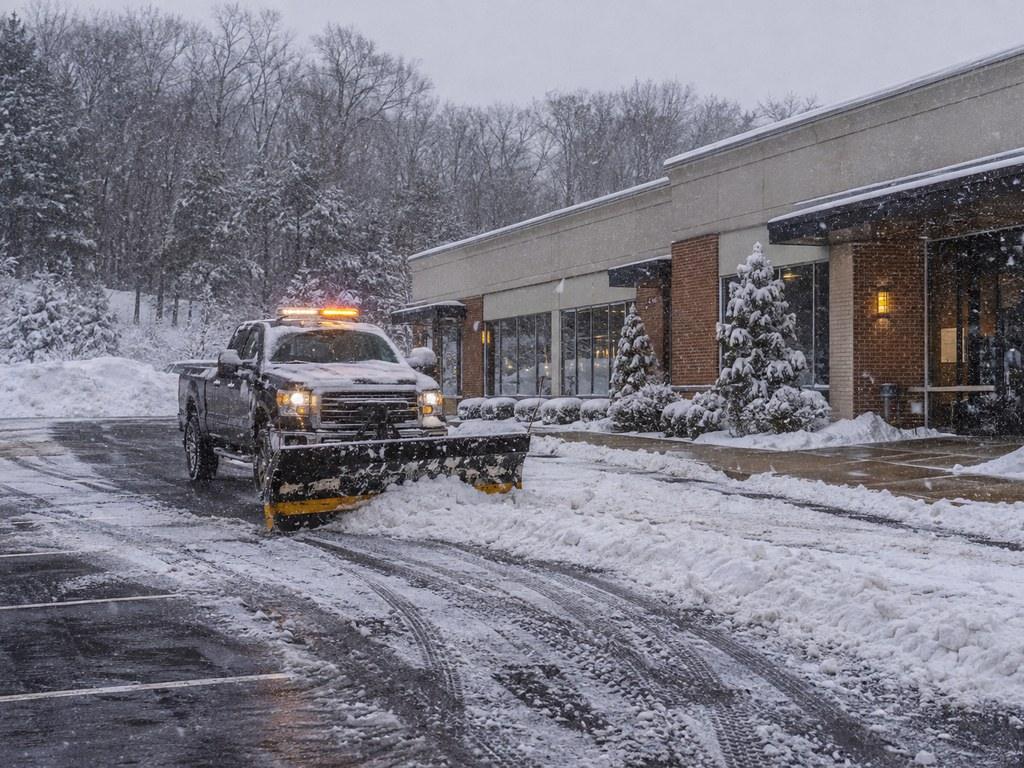
Managing a commercial property? Lot islands and entrance lawns need the same planning at a larger scale. Our commercial snow plowing and ice management service is available 24/7 through the season.
Spring Recovery: Repairing Snow Mold, Salt and Plow Damage
When the snow melts in March, walk the whole property before you do anything else. Note patches, brown edges and scraped areas, then work through them in this order.
Snow mold patches
- Rake matted areas gently once the surface dries to lift the grass and let air and sun in. Iowa State Extension notes this helps the patches dry out and limits further fungal growth.
- Give them time. Gray snow mold patches usually green up from the crowns, just more slowly than the rest of the lawn.
- Reseed spots that have not filled in by late spring. A light spring feeding also helps new growth, as long as it is after March 15 if the product contains phosphate.
Salt burned strips
- Flush the area with two or three deep soakings a few days apart to push salt below the root zone, as recommended by UConn’s soil lab. Spring rain helps, but deliberate watering is faster.
- Consider a soil test from the strip and tell the lab it is a salt-affected area so they can interpret the results with that in mind.
- Rake out dead grass, add a thin layer of compost or screened topsoil and reseed.
Gypsum is often suggested for salt damage, but Wisconsin Extension notes it only helps where soil drains well, and many roadside strips do not.
Plow scrapes and ruts
- Push torn sod back into place and press it down firmly if the roots are still attached.
- Fill ruts and gouges with topsoil, level them with the surrounding grade and firm the soil.
- Seed and keep the area evenly moist until the grass is established.
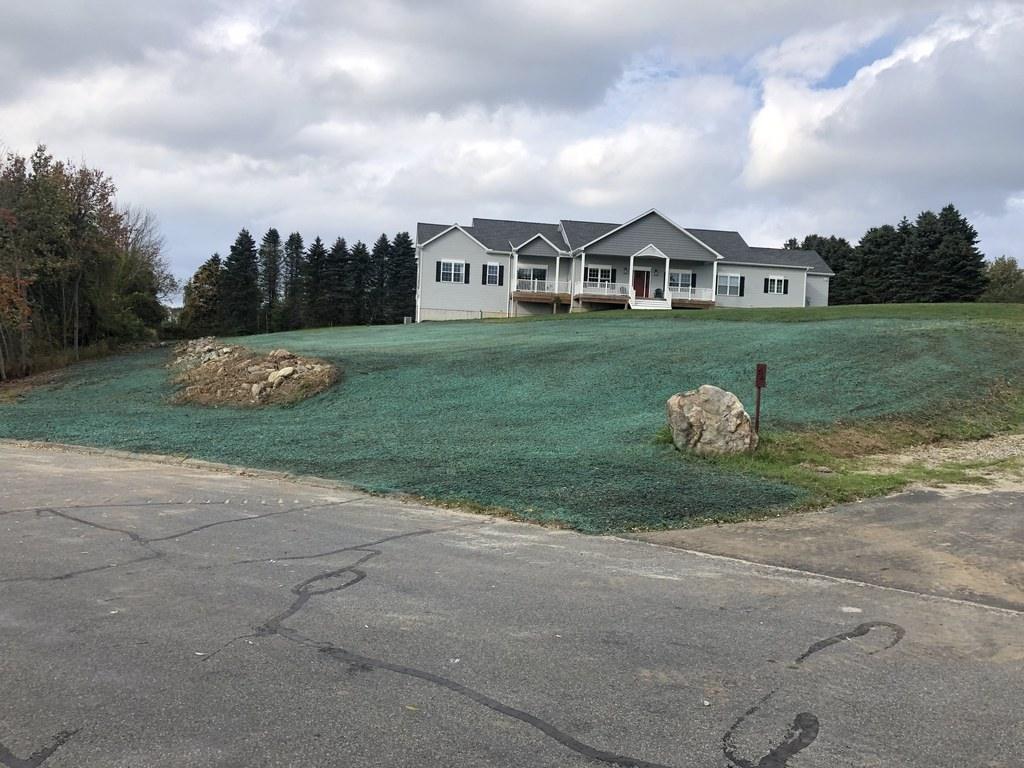
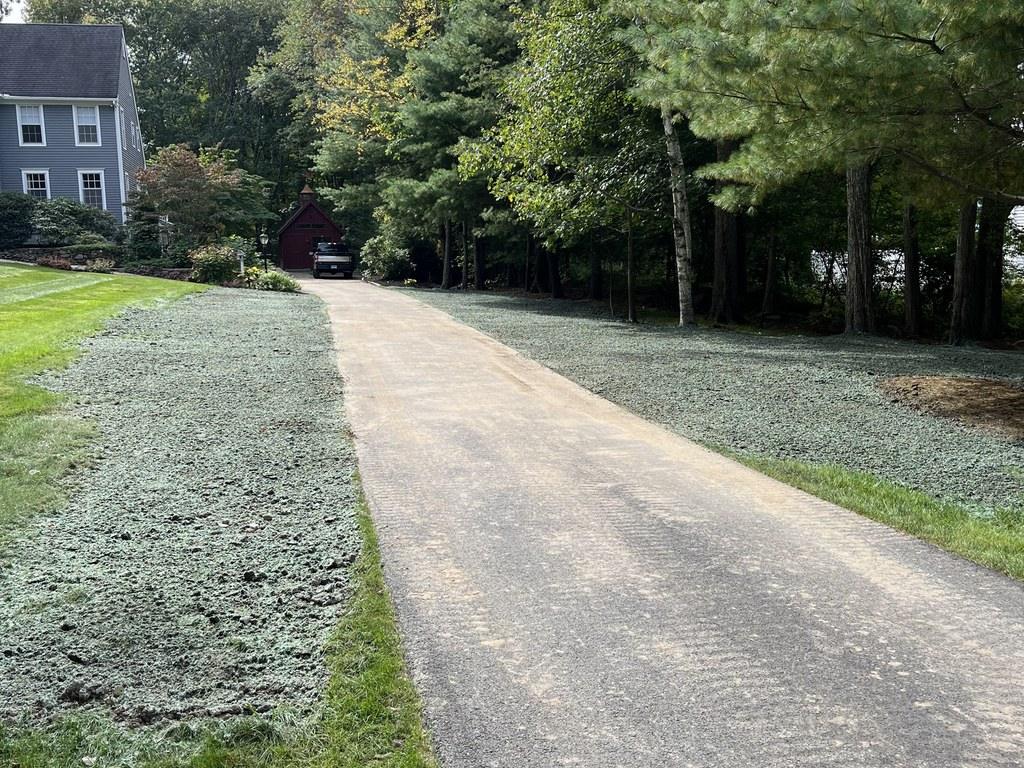
For large damaged areas, ask us whether hydroseeding makes sense. Note that UConn’s lawn guidance calls early fall the preferred planting window and warns that spring seedings have more limited success, so repair spring damage as early as soil conditions allow and keep it watered.
Our spring and fall cleanup services cover much of this work, from clearing winter debris to getting beds and edges ready for the season.
Winter Lawn Care Checklist
Print this or save it to your phone for November.
- Keep mowing until the grass stops growing, lowering the height gradually
- Remove or mulch all leaves off the lawn
- Skip late nitrogen; no phosphate fertilizer from December 1 to March 15
- Apply lime only if a soil test calls for it, and only on unfrozen soil
- Clean and winterize the mower
- Stake driveway and walkway edges before the ground freezes
- Mark lights, irrigation heads, curbs and drains
- Choose snow pile locations away from the lawn and beds
- Stock a lower-chloride de-icer or sand for paths next to grass
- Book spring cleanup so repairs start as soon as the snow is gone
Frequently Asked Questions
Should I cut my grass short for winter?
Cut it a little shorter than your summer height, but do not scalp it. Lower the mower gradually over the last few cuts and never remove more than one third of the blade at once. The goal is to avoid long grass that mats down under snow.
When is the last mow of the season in Connecticut?
Keep mowing as long as the grass is still growing. UConn Extension notes that in mild falls this can run into early November. Once the grass stops growing, the final cut of the year is done.
Can I fertilize my lawn in winter in Connecticut?
No phosphate-containing fertilizer, soil amendment or compost may be applied to any lawn in Connecticut from December 1 to March 15. UConn recommends finishing lawn fertilizing by mid-October, and UMass advises no nitrogen after the first frost.
Will snow mold kill my lawn?
Usually not. In most cases gray snow mold kills only the leaf blades, and the grass regrows from the crowns. Rake affected patches gently in spring and reseed any spots that do not recover.
Does road salt permanently damage grass?
It can if salt keeps building up each year. Sodium damages soil structure and chloride burns roots. Flushing the area with deep watering in spring, adding compost and reseeding usually brings a strip back. Reducing salt next to the lawn prevents the problem from repeating.
What is the best ice melt to use near my lawn?
Calcium magnesium acetate (CMA) is chloride-free and gentler on plants, according to UConn, though it costs more. Calcium chloride and magnesium chloride work at lower temperatures but still add chloride. Whatever you use, shovel first and spread thinly.
Get Your Lawn Ready for Winter with Roberts Property Management
A few hours of preparation in November saves weeks of repair in spring. If you would rather hand it off, our crew provides lawn mowing, seasonal cleanups and full landscape maintenance for homes and businesses in Thomaston, Litchfield, Bristol, Torrington, Farmington and the surrounding towns.
Call us at (860) 248-7966 to schedule your fall cleanup, plan your winter edges or book spring cleanup and lawn repair. You can also learn more about our lawn mowing service.