
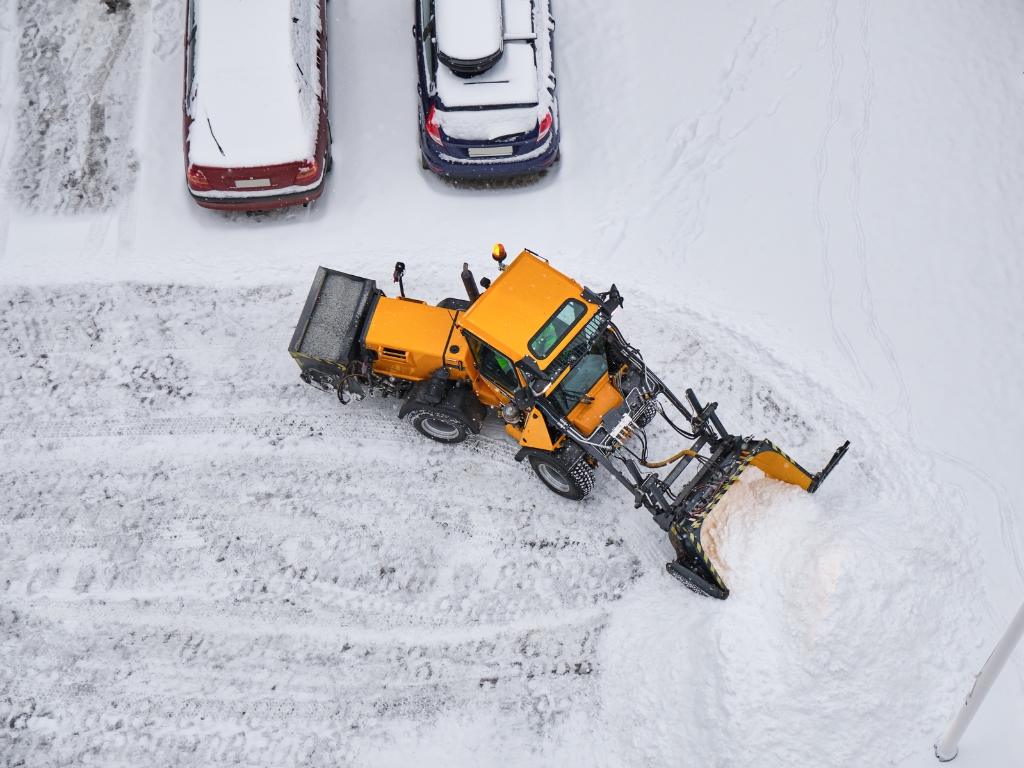
If you manage a commercial property, winter maintenance may seem straightforward at first glance. Snow falls. Crews show up. Pavement gets cleared. Problem solved.
Except it usually isn’t.
Commercial snow plowing is only one piece of winter safety. It handles what you can see. Ice management handles what you can’t and what causes most injuries, complaints, and liability issues after a storm.
If your winter plan stops at plowing, you’re leaving serious risks behind.
Commercial Snow Plowing Clears Snow, Not Conditions
Commercial snow plowing is designed to move snow off driving and walking surfaces. That matters. Access roads, parking lots, and fire lanes must stay open.
But plowing also creates new conditions.
Snow piles melt during the day. Water runs across the pavement. Overnight temperatures drop. That water refreezes into black ice. Areas that looked safe at 6 p.m. become dangerous by 6 a.m.
This is where many property managers get caught off guard. The lot looks clean, but the surface is slick. Tenants arrive. Customers walk in. Someone slips.
The issue wasn’t the plow. The issue was what happened after the plow left.
Ice Forms Faster Than Most People Expect
Ice doesn’t need a major storm to create problems. Light snowfall, freezing rain, or even daytime sun can set the stage.
Common triggers include melting snow refreezing overnight, shaded areas that never dry, and compacted snow that turns icy under traffic. Entryways, crosswalks, ADA ramps, and loading zones are especially vulnerable.
Commercial snow plowing removes accumulation, but it doesn’t stop these conditions from forming. Without de-icing or anti-icing, ice builds quietly and often invisibly.
That’s why most slip-and-fall incidents happen after storms, not during them.
Liability Doesn’t End When Snow Is Gone
From a risk standpoint, plowing alone rarely meets expectations. Property owners are generally expected to take reasonable steps to reduce hazards, not just remove visible snow.
When an incident occurs, the question isn’t, “Did you plow?” It’s, “Did you manage the conditions?”
If ice was present hours after commercial snow plowing, that opens the door to claims. Even if snow removal was done correctly, untreated ice suggests incomplete care. This is why insurance carriers and legal teams focus heavily on post-plow ice control.
De-Icing and Anti-Icing Serve Different Purposes
Ice management isn’t a one-step task. It’s an ongoing process that starts before a storm and continues well after commercial snow plowing is finished.
Many property managers lump de-icing and anti-icing together, but they solve different problems at different times. Understanding that difference is what separates reactive winter maintenance from proactive risk control.
Anti-icing happens before snow or ice hits the pavement. A liquid treatment is applied to create a thin barrier between the surface and incoming moisture. When snow begins to fall or temperatures drop, ice has a harder time bonding to the pavement. That bond prevention is key. Once ice sticks, removal becomes harder, slower, and more material-intensive.
De-icing, on the other hand, happens after ice forms. Its job is to break the bond that already exists so the ice can be removed or melt away safely. This is where most properties spend their time and money because they’re reacting to conditions instead of preventing them.
When paired with commercial snow plowing, anti-icing changes the entire equation. Snow doesn’t bond as tightly to treated surfaces, which makes plowing more effective and less abrasive. Less ice forms in the first place, and when conditions shift, de-icing can be used selectively instead of aggressively.
Why Salt Alone Often Fails
Salt is the most common ice control tool, and it’s often overused. Many properties assume that if some salt works, more must be better.
That assumption causes problems.
Salt becomes less effective as temperatures drop. In very cold conditions, it can stop working altogether. When applied too heavily, it damages concrete, accelerates asphalt wear, and harms surrounding landscaping. It also creates runoff issues that raise environmental concerns.
Over time, these effects increase maintenance costs and shorten the lifespan of your pavement.
Another issue is timing. Dumping salt after ice has fully formed forces it to work harder and longer. That means higher application rates and slower results. When salt is used without anti-icing or a proper de-icing strategy, it becomes a blunt tool instead of a precise one.
Timing Matters More Than Volume
Ice management isn’t about throwing material everywhere. It’s about understanding timing.
Pavement temperature matters more than air temperature. Traffic patterns matter. Refreeze cycles matter. A surface treated too early or too late won’t respond the same way.
Professional winter plans account for these variables. After commercial snow plowing, crews monitor conditions and return if refreezing is likely. That follow-up is what prevents early-morning incidents and emergency calls.
Not All Properties Face the Same Risks
Every site behaves differently in winter.
Retail centers deal with constant foot traffic. Office parks see concentrated morning and evening rushes. Industrial sites have heavy vehicles, loading docks, and safety-sensitive operations.
Commercial snow plowing alone treats all these properties the same. Ice management adapts to how each space is actually used. That flexibility reduces risk where it matters most.
A Smarter Winter Strategy
A complete winter plan includes commercial snow plowing, but it doesn’t stop there. It also accounts for what happens before, during, and after storms.
That means anticipating ice, treating surfaces proactively, monitoring conditions, and responding as weather changes. It’s not about doing more work. It’s about doing the right work at the right time.
Before the next storm hits, ask yourself one question: Are you just clearing snow or are you managing winter risk?
If your current plan stops at plowing, Roberts Property Management can help you take a more proactive approach that protects people, reduces liability, and keeps your property running smoothly.

